
an Interview with Pinks from Feral Frequencies
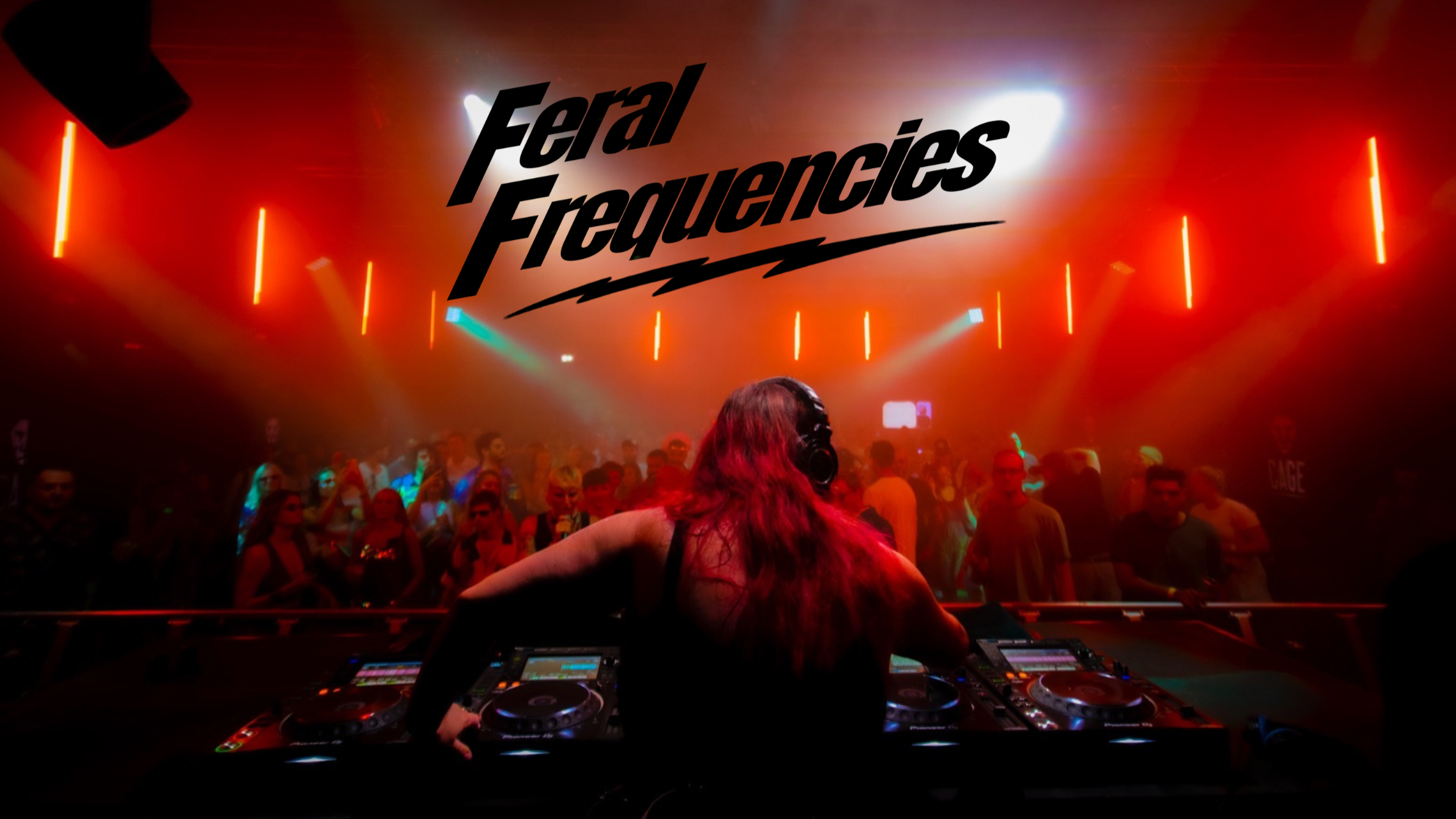
With Feral Frequencies, a new community has emerged. Pinks started it as a safe space for everyone who is into jungle, hardcore, and drum & bass. On July 24, they are throwing their launch event at Planet Wax, a small venue supporting many upcoming artists and grassroots labels.
Our writer Annelies Rom had a chat with Pinks and talked about why she started Feral Frequencies, the challenges of building a new music platform, and how we can protect grassroots music.
Q: What made you decide to start Feral Frequencies?
I'd been thinking about it for quite a long time, and I actually came up with the name six months before I started it. I used to run a multi-genre event last year which wasn't ever a proper brand, and I really enjoyed it. I went to this event called NLDC in London, North London Dub Club. It’s a free monthly dubstep event, and there's a really lovely community around it. That was inspiring me when I was thinking about starting this brand, because I felt like there wasn't anything that I knew about for jungle, hardcore and drum & bass that brought that similar vibe and was free entry.
In January I went to Rupture with my friend Big Trev. I've been to Rupture loads of times before, but this time was different because it was in January, and we were both doing Dry January. We were totally sober but we had this spiritual awakening. It was Rupture’s last Ferry to the Underworld event at Corsica Studios, Double O & Mantra all night long hosted by Chickaboo, Blackeye and Moose. They were playing some insane jungle, hardcore that threw us into a different dimension. I've been in the scene as an artist for six years now. Over the years I’ve seen the explosion of drum & bass into the mainstream at the level that it is now, and I felt like I was having to make my sound match the commercial sounds that have become popular. Don't get me wrong, I do like some of it but I was playing a lot of music that I didn't feel I actually liked that much and that I just felt people wanted to hear. Going to this specific Rupture event where I was in a room surrounded by people who were really there for the music, was eye-opening. Rupture is completely about the music, the DJ is on the same level as the crowd, and it’s all dark gritty jungle and a bit of hardcore as well.
I realised that I needed to stop pretending to be someone that I'm not musically and this was proof that, although there’s a place for commercial drum & bass, I don’t have to chase that if it isn’t the music I genuinely want to make. I’m a lot happier for it. I'm sure I'm not the only person who's feeling that way because generally speaking, you're not alone in the way that you feel about anything. I'm neurodivergent, I'm queer, I'm plus-sized, I'm a lot of alternative things, I also dress alternatively. I've never felt like I fit in in school, all of those things. I'd always try and fit in when I was younger and then obviously as I got older I was thinking, no, I'm just going to be myself. But then I realised that I was doing those same things that I did when I was a child or a teenager, trying to fit in with my music in the one place that I already felt that I fit in, so with Feral Frequencies I’m deciding to choose myself once again.
Q: So with Feral Frequencies, are you providing space for people that feel like they don't fit in or people that feel like they have to comply with the mainstream but don't actually want to?
Definitely. Many of the modern dance music scenes we know today grew out of spaces created by Black and LGBTQ+ communities. They were initially a place for people who didn't fit into mainstream society because they were marginalised, and this was out of necessity for survival and safety. I feel like the commercialisation of drum & bass has moved away from that quite a lot. I want Feral Frequencies to be a safe place for people who don't feel like they fit in to be themselves. It’s for music lovers and unhinged people, because drum & bass ravers, jungle ravers, and hardcore ravers already are quite different to the rest of the music scene, the bass music scene especially.
Q: What type of music are you bringing with Feral Frequencies?
Jungle, hardcore and drum & bass, underground sound, and high energy. Sometimes when people say underground they think of more introspective drum & bass, the music you don’t necessarily dance to and lose your mind to. It's in the name, Feral Frequencies. It's music that I want people to go feral to. The filthy high energy drum & bass, jungle and bouncy throw-your-hands-in-the air hardcore. It's the music that resonates with me the most.
As DJs we're meant to read the crowd and not play a load of tunes that the crowd doesn’t like, but I feel like DJs nowadays are almost afraid to take risks. They're afraid to play new sounds and that can stop new sounds coming through. I recently came across a LO-WU video that claimed that, for the first time since 1988, the UK hasn't come out with a new music genre in over 10 years. There are so many reasons as to why that could be true, maybe it has to do with the economy as well, but I think it’s pretty crazy.
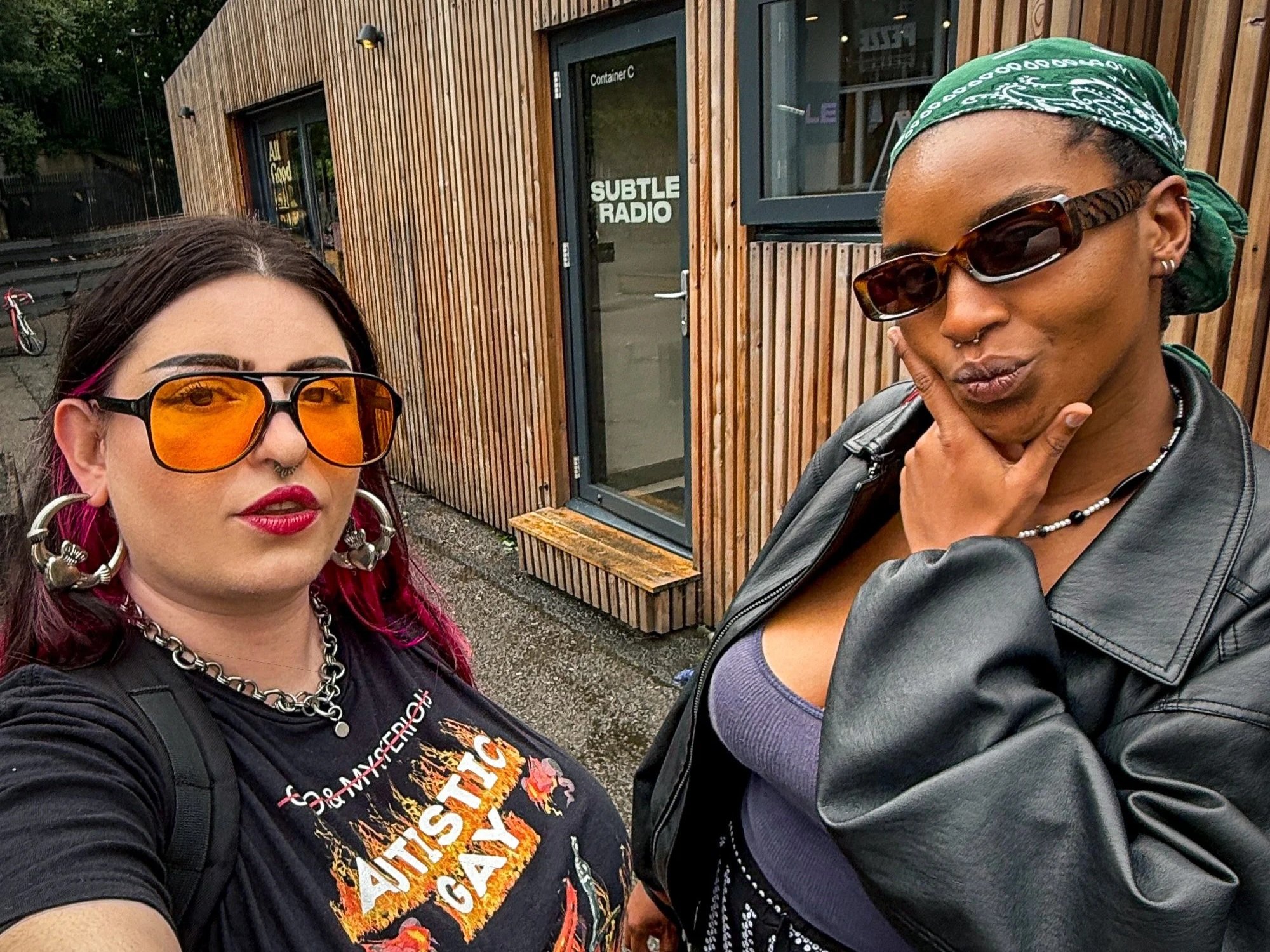
Pinks has featured on multiple radio shows, including: Thames Delta Radio, Subtle Radio and Brixton Radio.
Q: Isn’t it conflicting? Because when you go to a rave nowadays, you hear a lot of different sounds, but then again, you hear the same sounds at a lot of different raves.
Yes, it is conflicting. I think people are less pigeonholed into liking one genre in general. It used to be, if you're a drum & bass raver, you would not be caught dead at a house or a techno rave. I might be talking further back than 10 years now, but the rise of 4x4 in D&B that was spearheaded by Mandidextrous, it made people more open minded. I was running multi-genre nights last year and they did very well too. People aren't as tribal with the music that they like, and although artists are pretty pressured to niche down, I would say that I've seen artists branching out into other genres, which is great to see. In my experience, raves are a lot safer than they were 10 years ago. Obviously there's a big discussion that's ongoing about women's safety, and a hell of a lot still needs to be done, but it is a lot safer than it used to be.
It might be down to the commercialisation and it being thrown in safer venues because they've got a big team. I can't remember how many years ago this was, but I'd tell this story on my TikTok about a guy that came up to me at a drum & bass rave and he thought he'd been bottled in the neck. That was just at Scala in King's Cross. I remember at the time I was thinking, that's weird, but I wasn't shocked. Whereas, if that were to happen now, I would definitely be shocked.
Q: What else do you think is changing in the scene?
While there is a pressure for artists to niche down, I'd say some drum and bass artists are being a bit more diverse with their sound. For example, three years ago, DJ Hazard had a release on Critical, which was a monumental moment. I've also noticed more jungle artists releasing on Critical recently, like Samurai Breaks. He's done collabs with Kasra, but when you listen to his Supersonic Booty Banger vibes, you wouldn’t imagine him making tunes with Kasra at all. There are more women than there used to be as well, which is a good thing to see.
Q: What are some of the challenges we’re still facing?
I've seen a lot of lineups with all straight white men on it… We had this conversation in 2020, why have we gone back? It's really weird. It's just insane, especially with everything that's going on at the moment. Drum & bass is black music, why is the lineup all white men? Women of colour are very underrepresented in the scene, because I feel like they, specifically black women, were left behind in that conversation. Which is crazy, because Kemistry, one half of Kemistry & Storm, who was also Goldie's partner at the time, took Goldie to his first rave and was integral to the history of drum & bass. She's one example of the huge contribution Black women have made to this culture, and I don't think they get recognised nearly enough. I can't believe I'm still saying this, but we need more diverse lineups. Your crowd is reflected in who you book, so if you book all straight white men, you're going to have a sausage fest, and no one wants that. Obviously there's a big issue of sexual harassment in the industry as well. There's an account on Instagram which is doing amazing things, it’s called Me Too DJs (@metoodjs). It’s not just drum & bass, it’s for all electronic music, but I think it’s great they're encouraging accountability in the industry.
Q: What can the audience do?
Stream their music, but it’s a weird one, isn't it? I know that some people have moral issues with streaming for various reasons, and I get it, but stream their music, share their music, repost their songs on SoundCloud… If you're a DJ, play their music in your sets, and if you have the opportunity for radio as well as a DJ, give these people opportunities, and show up at their gigs. Say there's like an artist that's from a marginalised group, and they're smaller, and you see that they're playing a small gig somewhere, go and buy a ticket and support them, show up if you can. It makes a lot of difference. Film them when they're playing, and send them the footage, because that's useful. Not everyone can afford a videographer, and then they can put it on their socials.
Q: How important is community to you?
Community is everything. I spoke about how raves started as a safe space for queer people of colour to come together, so without that community, raves literally wouldn't exist. That also shows that raves were never started as a cash grab, and if you look at things currently, it's really important to support your local grassroots rave community. Without it, no new artists break through, and therefore, no new sounds break through, and everything just stays the same. It's part of the foundation that builds everything, the big raves obviously have their place, commercial drum & bass isn't the enemy. I’ve played in commercial venues and at festivals like Tomorrowland, and I had a great time doing it. The problem is when grassroots culture, small venues and new artists get neglected because so much attention goes to the commercial end.
Q: Because you're a new promoter, you're looking to organize events in smaller venues, but a lot of them have been closing down recently, what's your view on that?
When I was looking at the launch party, my aim was always Planet Wax, and I'm really glad that they came through with the date. We weren't sure if we'd definitely be able to do it at Planet Wax, so I was looking at other venues of a similar capacity, and it was really hard. It was also really hard to find a venue that didn't need a massive hire fee. I get it, because they're struggling, but the first event I wanted to be free. I just think that people need free events to go to.
The first time I went raving was a free party in the middle of somewhere in East London, and I think that's a really important part of our scene. There need to be accessible events for people to enjoy, so they're not having to pay £60 to go to a massive rave once every few months. So, yeah, I found that finding a small club really hard, and I was thinking, it's because everything's closing down. A lot of the venues that people would throw events at are closing down. I'm pretty sure Hop Kingdom closed down, which was a great venue, a skate park and a bar in London. Hopefully they'll open again. The closure of Corsica was awful as well, such a huge loss for the scene.
It’s really worrying and concerning. It’s a really hard time to be a promoter, and it's a really hard time to be a venue owner, which is crazy because I've just started being a promoter. God knows I love a challenge, but there's ways around it. I think we've got to start thinking outside of the box. The model that is “book big headliner, promoter risks loads of money, ends up not selling out, has to pay venue loads of money, venue doesn't make enough money on the bar”... maybe that model is tired and we need to think of something else.
Q: How can we protect the small venues?
Protect the small venues by going to them. That is the main way, and then obviously, if you see any venues that are at risk of closure, sign the petitions, if you have it in you, protest, if they've organised protests. Ridley Road is under threat at the moment, it’s home to Ridley Road Market Bar which throws a lot of rave events. It’s also a really, really important part of the local community. Another important thing is voting wisely when it comes to the general election, because at the end of the day, a lot of these venues shutting down are because of development and gentrification. Have a look at how politicians are aiding that as well.
Q: To end the interview on a positive note, rather than a negative one, what's your hope for the future?
I want Feral Frequencies to become a home for underground jungle, hardcore and drum & bass culture. I want to build a lasting, loyal community and cultural platform. I think there are a lot of gaps in the scene overall, such as size inclusive rave fashion for example. I also don’t think there’s enough physical media out there, so we’re looking at starting a zine. Alongside our monthly Subtle Radio show, takeovers and events which will be creating opportunities for new artists and putting underground jungle, drum and bass and hardcore up on the pedestal that it deserves to be on.
You can find Feral Frequencies on Instagram here.
Credit to Annelies Rom for writing this piece.
