
an Interview with Acolyte
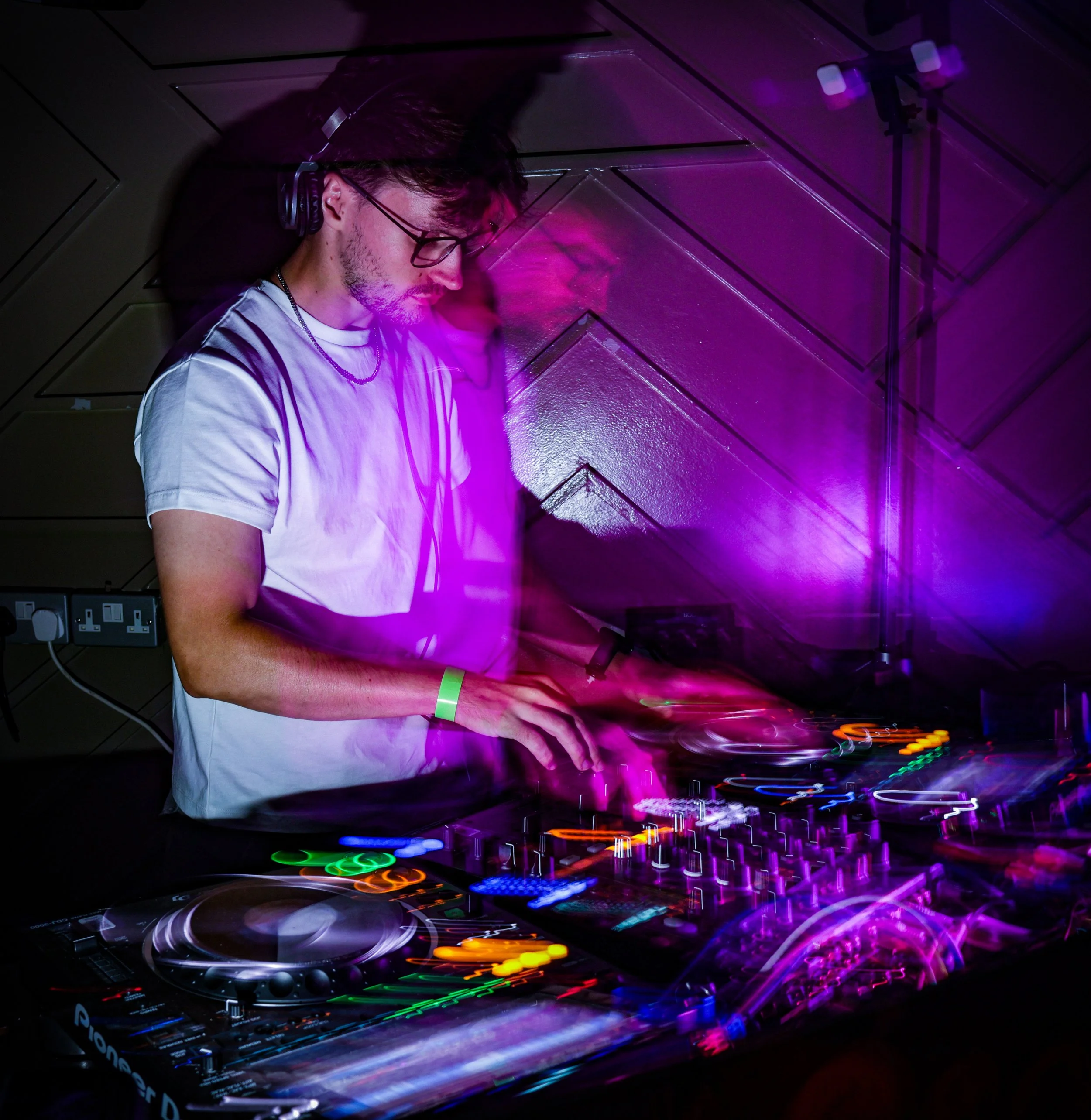
Acolyte is a DJ based in London. He is known for his clean neuro, techy DnB sound and unique style. He is the co-founder of Proelium Audio, Operations Lead for Basscamp, founder of Teksektr and one of our residents!
Q: Why did you decide to get involved with Croakheads?
Croakheads embodied community first, and that’s something that a lot of collectives, while they try, don't often have it as their main goal. Most collectives go for the usual "let's put a night on so we can DJ in front of people". Croakheads take this beyond often giving back to those who value the collective’s vision and goals, taking initiative to build the community and be more than just another DJ collective clique. It's important that everyone who makes the effort is championed, not just the most popular DJs. Music is all about community and how the shared interest in the music brings us all together.
Q: What are some of your favourite memories with Croakheads?
There are so many to choose from because every event we go to is just so fun, so lively, they have so much energy to it. Especially with Žaba running it. You can see that she's completely enthralled with running these shows and bringing people together. A little bit more of an ego side answer now, but one of my favourite memories was going back to back with Gifta, who I see as a big inspiration with everything that she does.
Q: What are some of your favourite memories with the wider scene?
We go to so many events, and it's hard to remember key moments from each of them, but one that we look back on, me and my partner, is one with Proelium Audio. We also run events with that brand, and we threw a summer party last year, with some headliners. We brought in some other collectives like Croakheads and Heavy Sonics, so that we can push their sound and the people that we appreciate from those collectives. Just being able to see everyone enjoying all the work that we put into making it happen.
Q: You mentioned Proelium Audio. How is it different from what you do with Croakheads?
Proelium Audio tends to do more headliner-focused events, and we tend to bring in artists that either don't play in the UK often, or aren't really booked for headline slots. We also push some of the more local and smaller brands and communities to fill the lineup, so that we're all feeding into each other. With Croakheads, it's all very much community-focused, it's all about the fundraising for Music Venue Trust, and making people more aware of the difficulties that grassroots are facing at the moment. While we like to throw a party on our side, we definitely don't have the same sort of community aspects that Croakheads do, so it's nice to be able to experience and help out with both things there.
Q: What can we expect from your sets and mixes?
There are so many to choose from because every event we go to is just so fun, so lively, they have so much energy to it. Especially with Žaba running it. You can see that she's completely enthralled with running these shows and bringing people together. A little bit more of an ego side answer now, but one of my favourite memories was going back to back with Gifta, who I see as a big inspiration with everything that she does.
Q: What introduced you to the scene?
With D&B specifically, I've had an interest in it since 2011, when I first discovered Monstercat. I used to listen to a lot of Feint, but it was a bit up and down for a good few years until around 2018. That’s when I made a new friend who was super into drum & bass, and I went to a rave with him. I think it was Critical Sound, and it really opened my eyes. Drum and bass was a lot bigger than what I already knew of it! Dancefloor is what you heard a lot of, and new age jump up was starting to become popular as well. Going and listening to the sounds of Critical made me realise that it's actually a lot bigger, and there are a lot more sounds that are worth exploring. I started getting into a lot of the darker, techier stuff just because of that.
Q: What made you fall in love with the scene?
I really fell in love with it when I got my first DJ set. It was with Blender Collective back in 2023, and they were doing small community-focused events, mainly neurofunk. They were always booking small DJs to show that they were appreciating the people who turned up. Being able to see all these other communities popping up over the last six years, since I started taking an interest into it… There are so many people that we've made friends with just because of the grassroots community scenes. A short list of these would be Teez, Diversion, Murmuration, Bass Camp LDN, Get Hook'd, Phase Records, dnb family, and there are so many more that I just can't think of off the top of my head. I’m so happy to be able to call all these people friends who have the same shared interest as all of us.
Q: What grassroots venue has shaped you the most, and why?
When first going out to grassroots raves, Dalston Den and Volts were the two that hold a place in bringing myself up as a DJ, with Blender Collective and Get Hook'd running open decks nights. If anything, it's the small promoters and collectives that make a bigger impact than the venue itself, as that is where the communities are built for people to continue visiting the grass roots venues. If the small promoters fail, who is gonna run distinct curated nights at these venues?
Q: What is the biggest challenge facing grassroots venues right now?
The cost of everything. This stems from the cost of living crisis, running costs going up, high inflation… Money is worth far less than ever before. There is wage stagnation, and small promoters can't afford to put some of their own money to run nights fully or often. While a lot of the grassroots pay out of pocket, sometimes to draw a crowd you need a headliner at the least, and more often than not, the agents inflate the cost to a point that guarantees losses for a promoter. Government inaction as well, doesn’t help. And lastly, audience interest is a big one! Usually due to all of these reasons, people are less likely to take chances on small or casual outings with local venues and promoters, saving for big events and known names which just further adds to the fuel of the issues the grassroots are currently facing.
Q: What can we do better as an audience to support?
I think it's a very big ask, because a lot of the people who will come to the smaller grassroots shows are either part of the community already, or they have friends playing the shows. With us throwing events and going to these gigs consistently, it's because it's at the forefront of our life, it’s a big chunk of who we are. For a lot of the usual audiences that you'd want to try and sell the tickets to, it's not as big a part of their lives. It's hard to ask people to come to the grassroots stuff when it's not their main interest. The best way to support the scene is to look up local nights. If you genuinely like the music, you want to hear stuff that you haven't heard before, meet people that you've never met before, and hear DJs play things that you would never hear outside, then you have to show up. The events are always cheap, they're usually easy to get to, and low stakes. Once you go to a few of them, people will start recognising you, they'll start making friends with you. That community aspect is what really hooks you and then keeps you coming back. Now you can go to these events on your own, and you're guaranteed that you're going to see people that you know there, which makes it so much easier.
Q: Do you think the grassroots scene will continue to exist?
A good case study of it is how UK dubstep before Skrillex was quite an underground niche music genre, in London particularly. After Skrillex blew up, he changed the landscape of what people thought dubstep was. UK dubstep never died because it had an underground scene keeping it alive, but it still took some time for it to come back after this whole hype. With American dubstep, it went through an insanely popular phase and fell off quite quickly when it first came about because it didn't have the underground to begin with. D&B always had a strong underground scene so even when it drops off a mainstream radar, it still holds stronger than the other genres do.
Q: Last but not least, what has been your favourite part of your Croakheads journey so far?
Becoming friends with Zaba who has been a massive inspiration in making things happen, work ethic, dealing with challenging situations and bringing life to all the time we've spent together!
You can find Acolyte on Instagram here and Soundcloud here.
Credit to Annelies Rom for helping to edit this piece and for interviewing Acolyte.
