
an Interview with our ambassador: deaddog
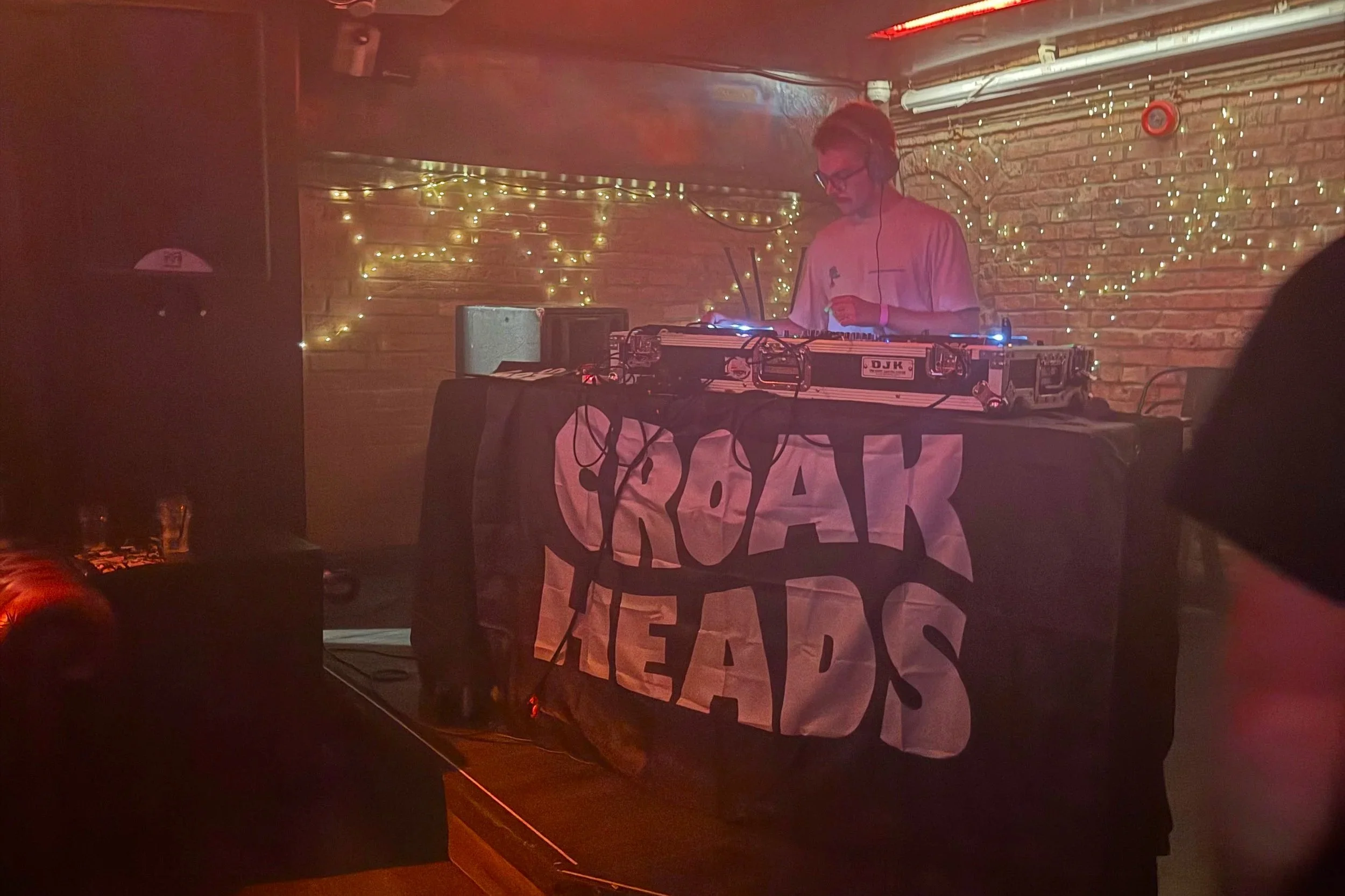
Our Ambassador Scott (Deaddog) has been a huge part of Croakheads since he joined. He has helped to run events, commute our artists and beloved bongos, as well as support us in other areas like activism, graphics design and recruitment for more people for the movement. Now he has begun his DJ journey with us, too.
Our writer Annelies Rom had a chat with Scott and talked about why he joined Croakheads, his favourite memories so far and what’s next for him in his DJ journey.
Q: Why did you decide to join Croakheads?
Croakheads stood out as a community driven project, where real impact is made by the people involved. At the time when I joined, I did not really know anyone in the scene, or anyone who was as passionate about drum & bass as I was. Croakheads allowed me to find likeminded people, who I would meet up with even outside of Croakheads events. The values of Croakheads stood out to me as well, with the raising money for grassroots venues, and the equality of line ups all being factors which I also believe in.
Q: What have been some of your favourite memories since joining Croakheads?
There are two parts to it for me, the people and the events. I went to the Bristol event back in March, and I saw people at that event that I'd seen at the event in Bristol previously, last year, and it was just like I'd seen an old friend. I've only met this person once before, but it was like I'd met an old friend that I'd not seen in a while. A Croakheads event is just going around and catching up with people. That's what makes it for me, personally. You go there and everyone goes with an open mind, you can have a great time. Another part of my favourite Croakheads memories are the events. For the Y2K event in London, we got inflatable dolphins, and the music to go with that, of course. The DJs bring their Y2K music and try to mix Y2K into drum & bass. Before that, I honestly didn't really associate drum & bass with Y2K, but that was really fun. Another good memory is when I played my first set for Croakheads with Minimole. That was at Basement 45. Even though there weren’t that many people, DJing with him, going back to back with him, was a really good experience to see how somebody that's been DJing for several years does it. We had a good laugh as well, it was a good time.
Q: Thinking about the wider scene, what are some of your favourite memories there?
We went to a little venue called the Jaguar Shoes. It’s a venue in London, and it’s got a pizza restaurant up top. When you go into it, it's a nice bar, people are sitting around chatting, eating pizza. There's this door at the back, it almost looks like the door to the toilet, but when you go through the door, it's a staircase down to the basement. There were loads of people down there listening to drum & bass. It's a very, very small venue, but very intimate, and people just want to talk and hang out. I had some great conversations with people about all sorts of stuff, not just scene stuff, also outside life. That’s probably one of my favourites.
Q: What can we expect from your sets and mixes?
My sets and mixes take a focus on letting the tunes breathe, letting the core of the tune get played. Tune selection is really important to me as well; I love dropping in the occasional tune from another genre if the set allows.
Q: What grassroots venue has shaped you the most and why?
Basement 45 in Bristol. The staff are so friendly and real, with all showing how much they care about the venue and the work they do. They take pride in their space.
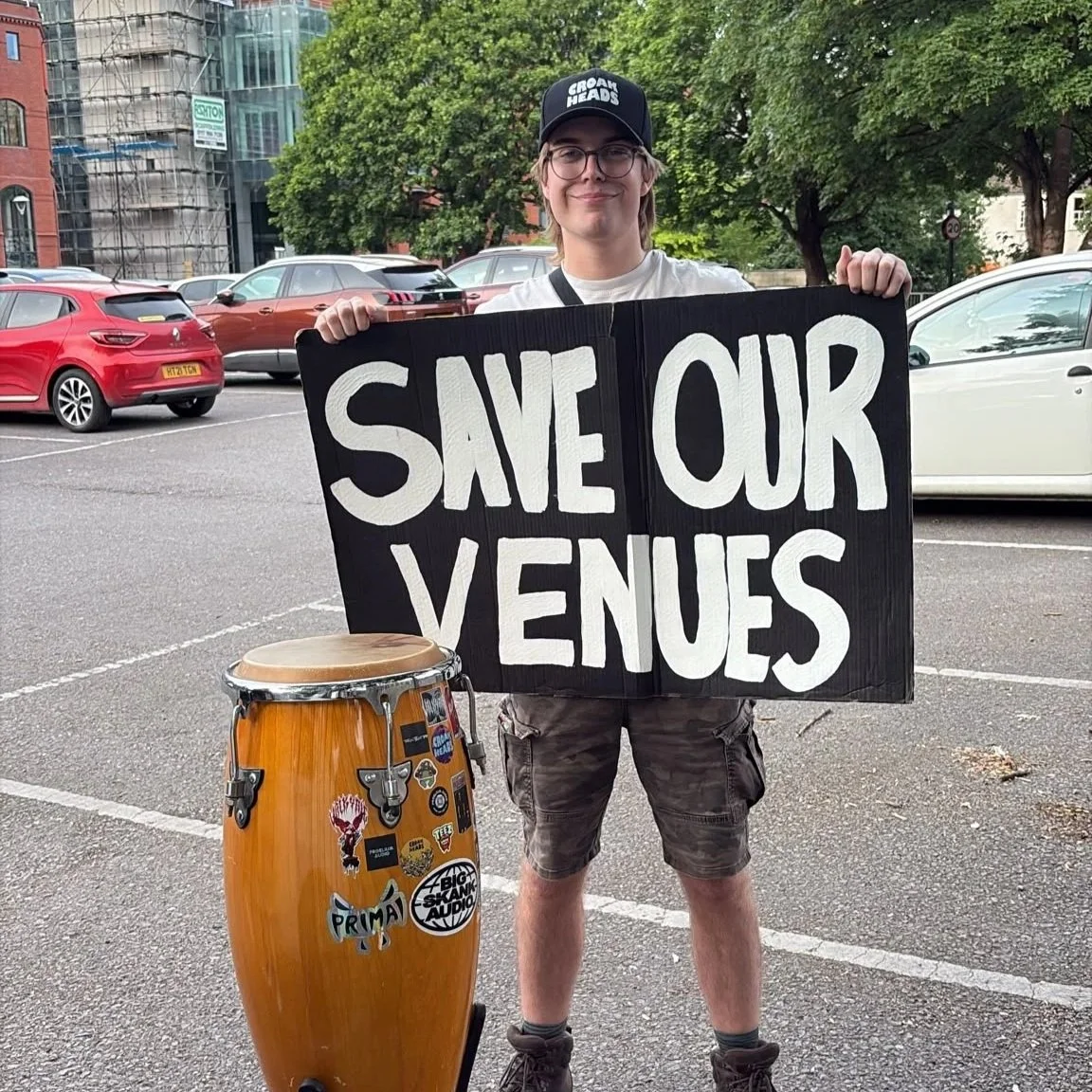
Deaddog and his famous travelling Croakheads bongo - bringing joy to multiple collectives and events.
Q: What other venues do you feel close to?
I live in Oxford right now, and locally, we've got the Bullingdon. They have a very big space out the back, but there's also the front part of it, where it's very intimate, and it's a nice time. When thinking about London, I’d say the Castle. We've had quite a few Croakheads events there. We know the guy that runs it to a certain extent. He's a nice character, he's very happy to see everyone all the time. He comes dressed up in a suit. There will be loads of people in the basement of this pub, just enjoying a bit of music, and he's there in a suit. I like that.
Q: What is the biggest challenge facing grassroots venues right now?
Cost of operating, inflating cost of mainstream events. When the cost of mainstream events rise, people tend to spend money to go to these rather than spending money to attend smaller grassroots events, even if they cost less for tickets. This results in less income for the venues, while costs continue to rise. Eventually without help or change, it becomes unsustainable. This is only one of the factors at play, but it is my interpretation of why we are in such a bad place currently.
Q: What can we do as an audience, and artists, to support grassroots venues?
Just carry on, we can just carry on going to grassroots music events. I speak to a lot of people about grassroots music and they're like, oh, what's that? Come on, guys, you know what grassroots music is. You listen to big music, but where do you reckon those people started? Have you ever thought about that? I guess as an audience, people that do already go to grassroots music events, it’s just about spreading the message with their friends and getting people more informed about grassroots music. Some people just don't know, they're just not very connected. I know a lot of people don't listen to music, don't go to events, but it's still important to know about these things. I'd say just spreading the message. As artists as well, use your platforms to share events and use your platform to say, look, this event's on, you guys should go to that.
You can find Deaddog on Instagram here. Or Soundcloud here.
Credit to Annelies Rom for writing this piece.
